Structural Drying · 24/7
Structural Drying in Queensland
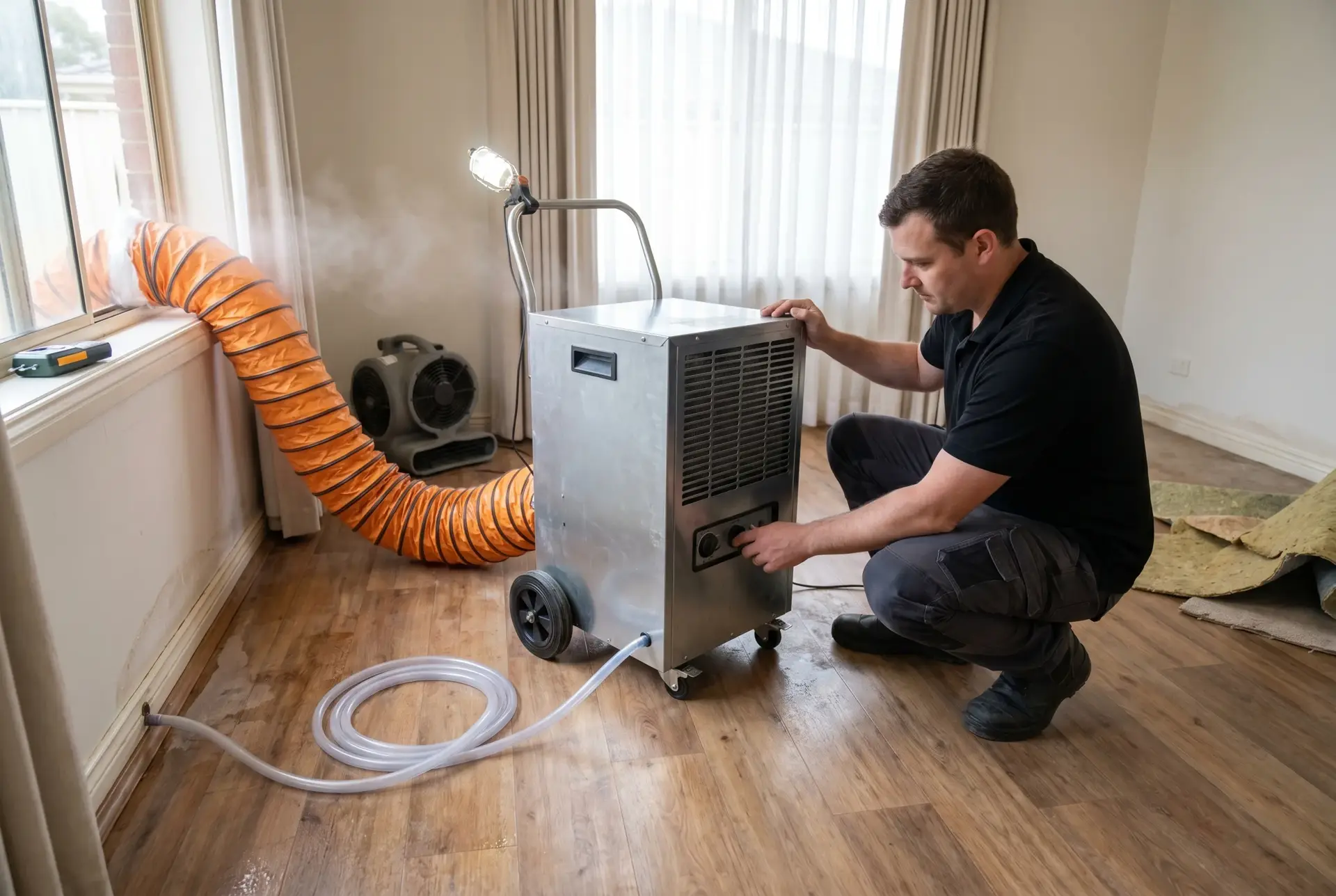
Water that gets into plasterboard, wall frames, timber floors and concrete slabs will not dry on its own fast enough to prevent damage. We use targeted drying systems and daily moisture monitoring until the structure is verified dry.
- 01On site in 60 minutes (target) across South East Queensland metro
- 02IICRC-certified technicians
- 03Reports your insurer will accept
24/7
Phones answered by a person, every day of the year
60 min
On-site target across South East Queensland metro
S500
Drying to the IICRC water damage standard
Report
Moisture logs and certificate on every job

01 — When to call
Signs you need us.
- Wet plasterboard or bubbling paint
- Cupping or swelling timber floors
- Damp skirting boards or door frames
- Slab or tiles still wet days after a leak
02 — How we do it
How we handle structural drying.
- 01T+0
Moisture mapping
Readings across walls, floors and ceilings set a baseline and drying goal.
- 02On arrival
Targeted drying
Wall-cavity injection, floor drying mats and dehumidifiers dry materials in place where possible.
- 03Days 1–5
Daily monitoring
We record readings each visit and adjust equipment to keep drying on track.
- 04Sign-off
Dry standard report
Final readings and a compliance certificate so repairs can start with confidence.
03 — The first hour
Before the crew arrives.
Only do what is safe. Everything else, leave to us.
While you wait for us
- 01Turn off the water at the mains if you can find the tap
- 02If water is near power points or the ceiling is sagging, switch off power at the switchboard only if it is safe
- 03Take photos and video of the damage for your insurer
- 04Lift furniture legs onto foil or blocks and move valuables up high
- 05Do not use a household vacuum on standing water
04 — FAQ
Questions people ask us first.
Do walls need to be cut open?+
Not always. Cavity drying can often dry walls in place. If insulation is soaked or water is contaminated, we may need to remove lower sections of plasterboard.
Why not just paint over it?+
Sealing in moisture traps it in the frame and cavity, which leads to mould, timber decay and paint failure later.
Coverage
From the Gold Coast to Cairns.
Crews based across South East Queensland, with regional teams in the north.
South East Queensland
60-minute target- Brisbane CBD & Inner CityBrisbane City · Fortitude Valley · New Farm
- Brisbane NorthChermside · Aspley · Nundah
- Brisbane SouthSunnybank · Mount Gravatt · Coorparoo
- Brisbane East & BaysideWynnum · Manly · Cannon Hill
- Brisbane WestIndooroopilly · Toowong · Kenmore
- LoganSpringwood · Underwood · Slacks Creek
- IpswichSpringfield Lakes · Redbank Plains · Goodna
- Moreton BayNorth Lakes · Strathpine · Redcliffe
- Gold CoastSouthport · Surfers Paradise · Broadbeach
- Sunshine CoastMaroochydore · Mooloolaba · Caloundra
- ToowoombaToowoomba City · Highfields · Rangeville
Regional Queensland
Time confirmed on callCall now · answered 24/7
Water where it shouldn’t be?
Every hour water sits, it travels further into walls, floors and cabinetry. Call and a crew starts moving.